Clicking When Turning and Vibrating When Accelerating? Check the CV Axles and CV Joints!
A repeated click shows up as you pull out of a parking space. Later, the car shudders when you accelerate, then settles down as you ease off the pedal. Those are patterns we want to hear about when checking CV axles and their joints.
The axle transfers drive to the wheel while its joints allow steering and suspension movement. Wear in those joints often changes the noise or vibration as the load and angle change. The way it happens helps us choose the first checks.
Worn Outer CV Joints Often Click During Turns
The outer joint sits near the wheel and works through changing angles as you steer. Wear inside it often produces repeated clicking under power during a turn. Many drivers first hear it during a slow parking maneuver, when the steering is turned farther than during ordinary cruising.
Why does the sound disappear once you straighten the wheel? Changing the joint angle and load changes how the worn surfaces meet. Tell us if you noticed it during left turns, right turns, or both. We check the joints and nearby parts before naming the failed side, because sound travels through the body and isn't always easy to place from the driver's seat.
Inner CV Joint Wear Sometimes Causes Acceleration Vibration
The inner joint allows the axle to accommodate suspension movement and changes in distance as the wheel travels. When its working surfaces wear, it sometimes shudders under load. That makes the car feel quite different while accelerating from how it feels coasting at the same road speed.
Does shaking under acceleration always mean a bad axle? Engine mounts, an intermediate shaft bearing, and engine running problems also produce load-related vibration. We compare when the shake appears with the condition of the axle and its supports. A vibration that mainly follows road speed brings tire and wheel checks into the investigation too.
Torn CV Boots Let Grease Out and Dirt In
The flexible boot holds grease around the joint and keeps water and grit away from its working surfaces. A split or loose clamp lets that grease escape. You might notice thick grease splattered inside a wheel or on nearby parts.
What if the boot is split but the joint is still quiet? An early repair sometimes preserves a joint that remains clean and undamaged. We inspect it before deciding. Once the joint is contaminated or already clicking from wear, adding grease and fitting another boot won't replace the damaged surfaces. Mention how long the split has been visible if you know.
CV Axle Testing Starts With the Driving Pattern
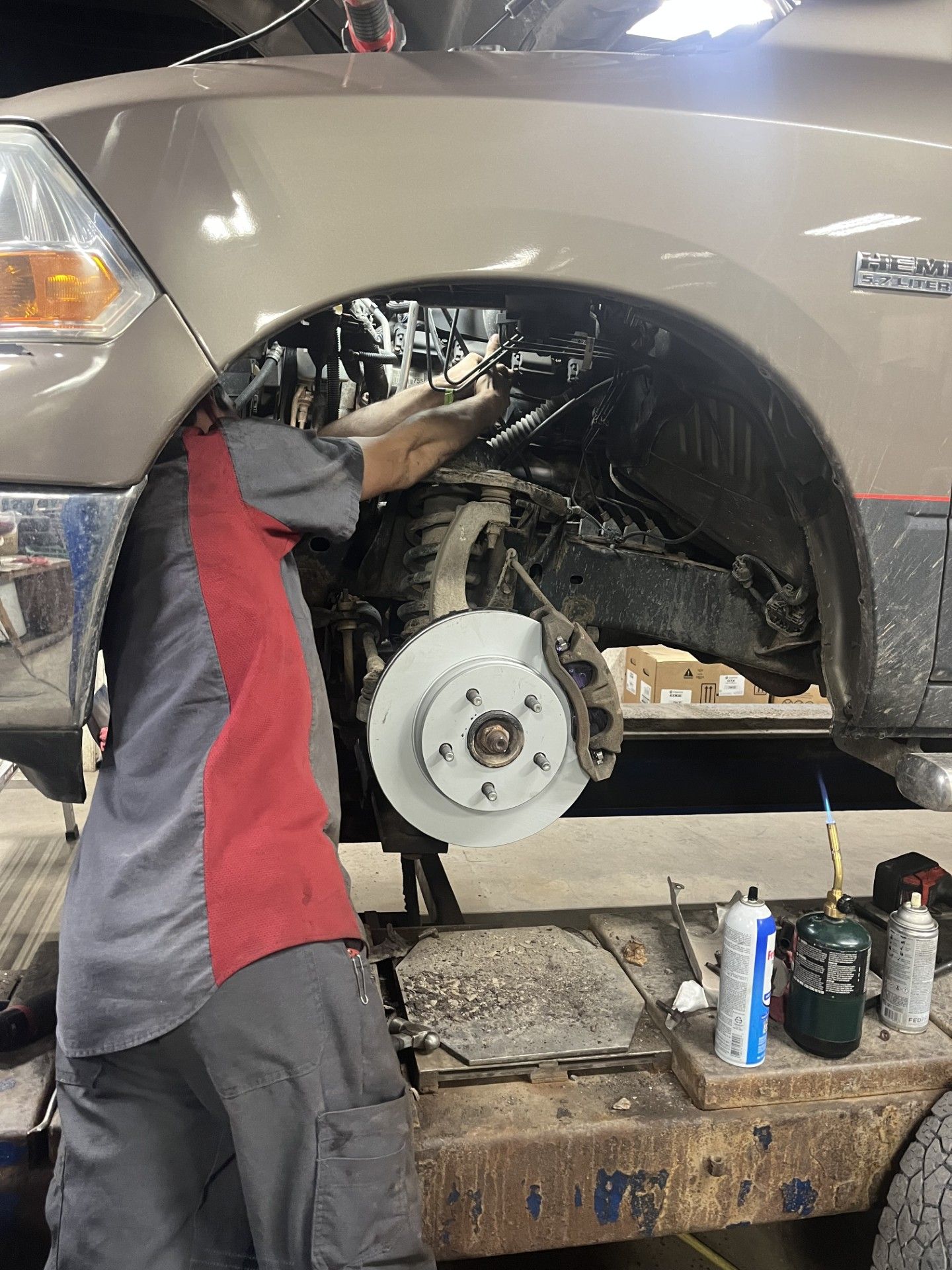
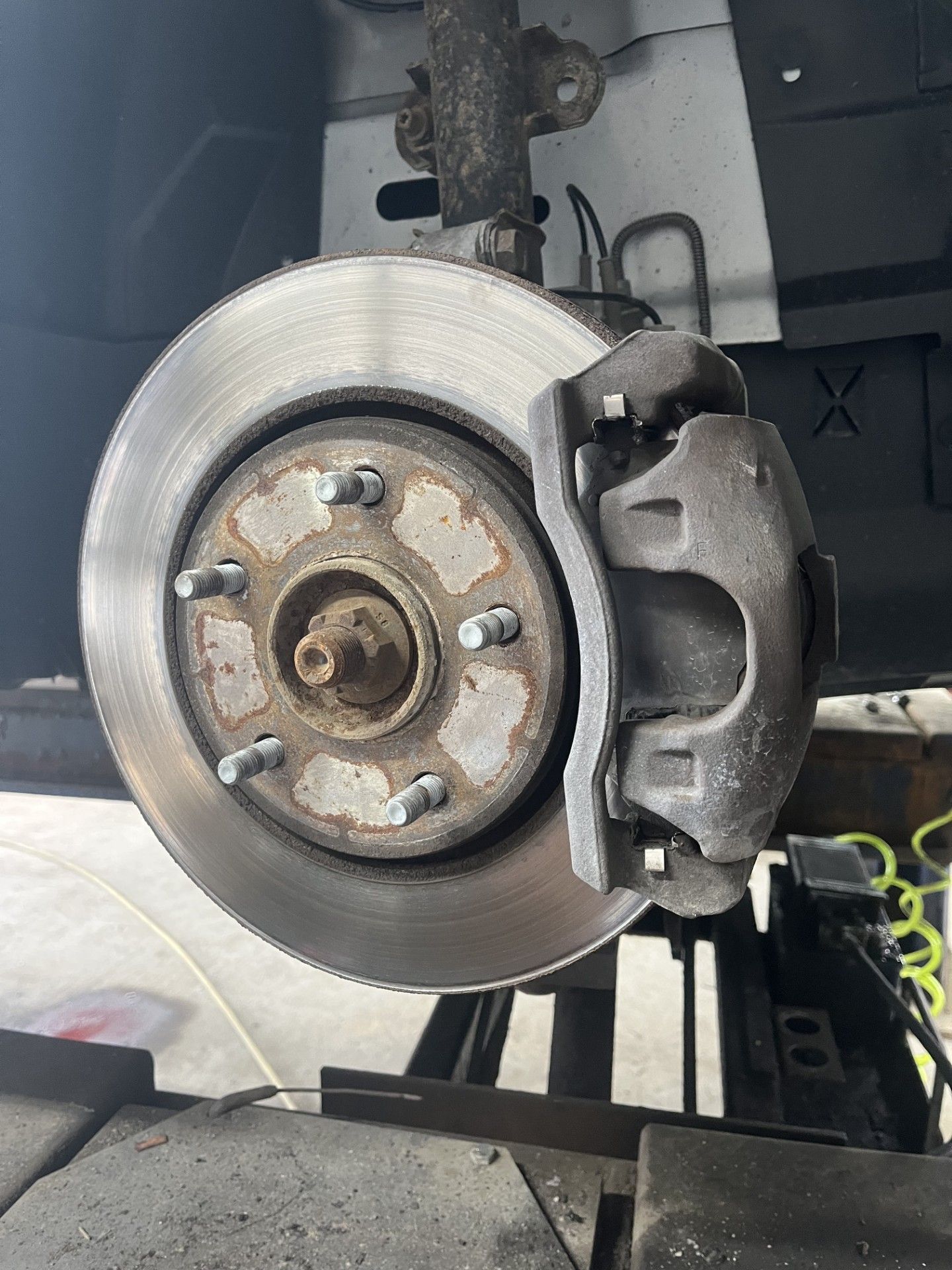
We road-test when safe, inspect the boots and clamps, and check joint movement using the procedure for the vehicle. Some movement is built into the design, so a joint that moves isn't automatically worn out. The condition and operating pattern have to fit together.
Before the appointment, note:
- The turns or speeds that bring on clicking
- Acceleration compared with coasting
- Grease marks or a visible boot split
- Recent axle work or a hard impact
Leave repeated tight-turn tests to the shop. There's no need to make the noise louder in a parking lot before booking. Your description and a controlled check give us a better starting point than a guessed axle replacement.
CV Joint Repair and Axle Replacement Depend on Condition
Some joints and boots are serviced separately, while other repairs use a complete axle assembly. Availability, wear, contamination, and the vehicle's design guide that choice. We inspect the opposite side too, but one worn axle doesn't automatically mean both have failed.
The replacement needs the correct length, splines, and other details for the application. Installation follows the required fastening procedure, including new hardware where specified. We also check seals and any fluid disturbed during removal, then verify the original noise or vibration afterward. A part fitting into place isn't the whole repair.
Know When CV Axle Symptoms Mean Stop Driving
A severely failed joint can leave the car without drive, and loose or damaged parts can affect nearby areas. Strong vibration, heavy clunking, changed control, or visible damage means stopping safely and discussing transport. Continuing until the car won't move isn't a sensible test.
You can look for grease or a split boot from a safe position with the car parked, but don't reach near rotating parts or crawl beneath an unsupported vehicle. Arrange a check for recurring clicking even if the car still drives smoothly in a straight line.
CV Axle and CV Joint Repair at Stroup's Garage in Yeagertown, PA
Stroup's Garage in Yeagertown, PA, can investigate clicking during turns and vibration under acceleration. Tell us when it happens and include any recent axle work.
Book an axle inspection so we can find the cause before choosing replacement parts.